If your business isn’t showing up to local searchers, your competitors are probably pocketing your customers. The secret to dominating neighborhood searches for businesses—multi-location brands especially—is local SEO. And the backbone of local SEO is domain authority, which is determined by how much your business platform or website is being linked back to.
Backlinks are digital votes of confidence that tell search engines your business is legit and reliable. But not just any backlinks. Reliable, niche-focused local backlinks are the best backlinks for local SEO because they connect your business with your community online. But how do you find these local backlinks?
What Are Local Backlinks
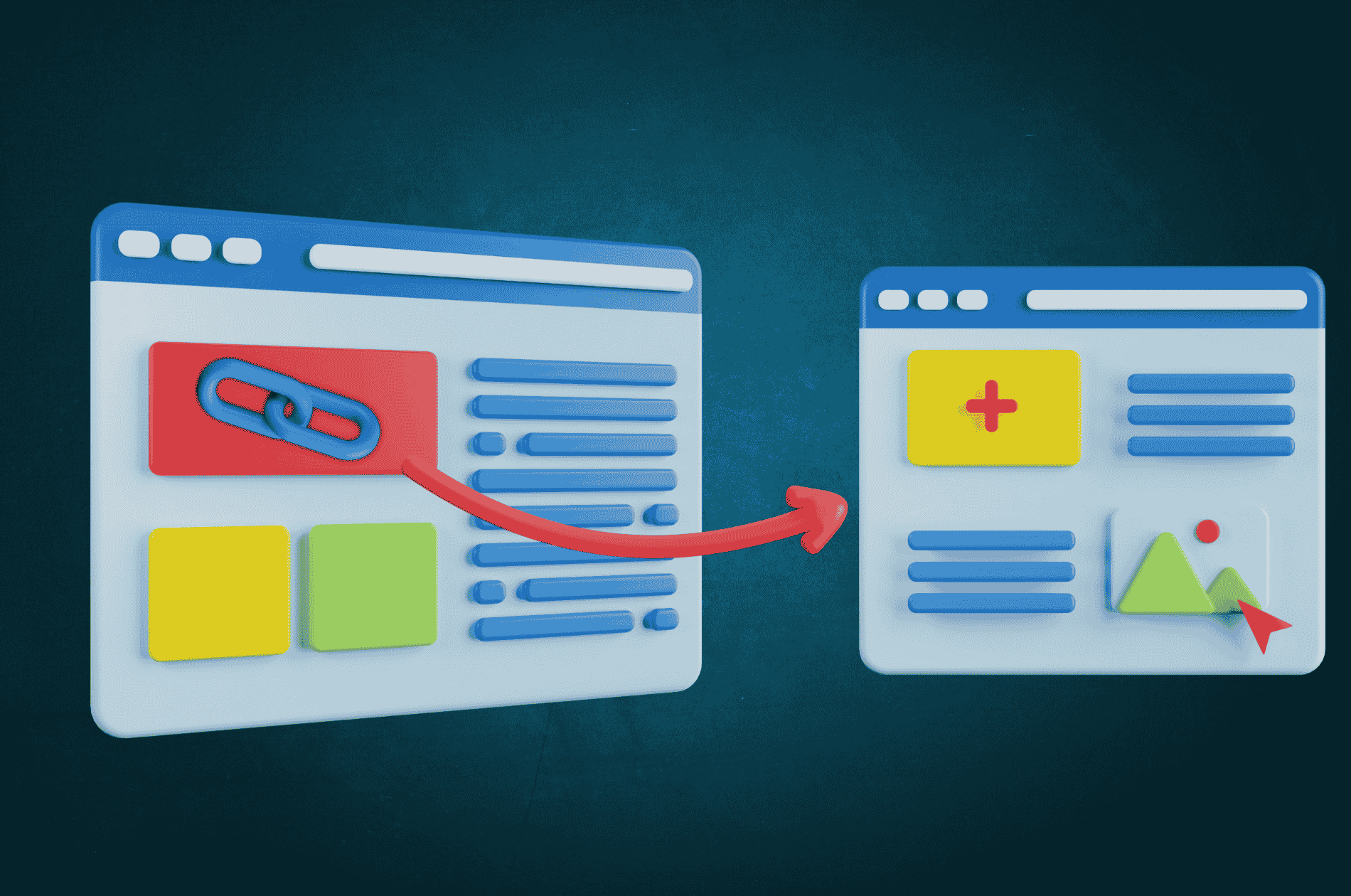
Simply put, local backlinks are hyperlinks from websites that are geographically relevant to your business. They’re the best backlinks for local SEO because they communicate to search engines that your business is relevant in a specific area.
For example, if you own a bakery in Atlanta, a backlink from an Atlanta food blog or community event page can boost your website’s local credibility. Because of this, search engines give you greater rankings for queries like “best bakery in Atlanta.”
Local SEO backlinks matter because they connect your business to its community, and search engines love that. According to 79.7% of SEO experts, link-building is vital for ranking success. Moz backs this up, noting that backlinks contribute to 19% of Google’s local search ranking factors after on-page optimization and your Google Business Profile listing.
A backlink from a local food blogger signals to Google, “This place is relevant for Chicago pizza lovers.” Hence, your visibility increases for searches like “best pizza near me.” For multi-location brands, local link building helps establish your business as the go-to choice in every neighborhood you serve.
Local Backlinks vs Citations
Let’s clear the fog. Backlinks and citations sound like cousins, but they play very different roles in your local SEO ranking factors.
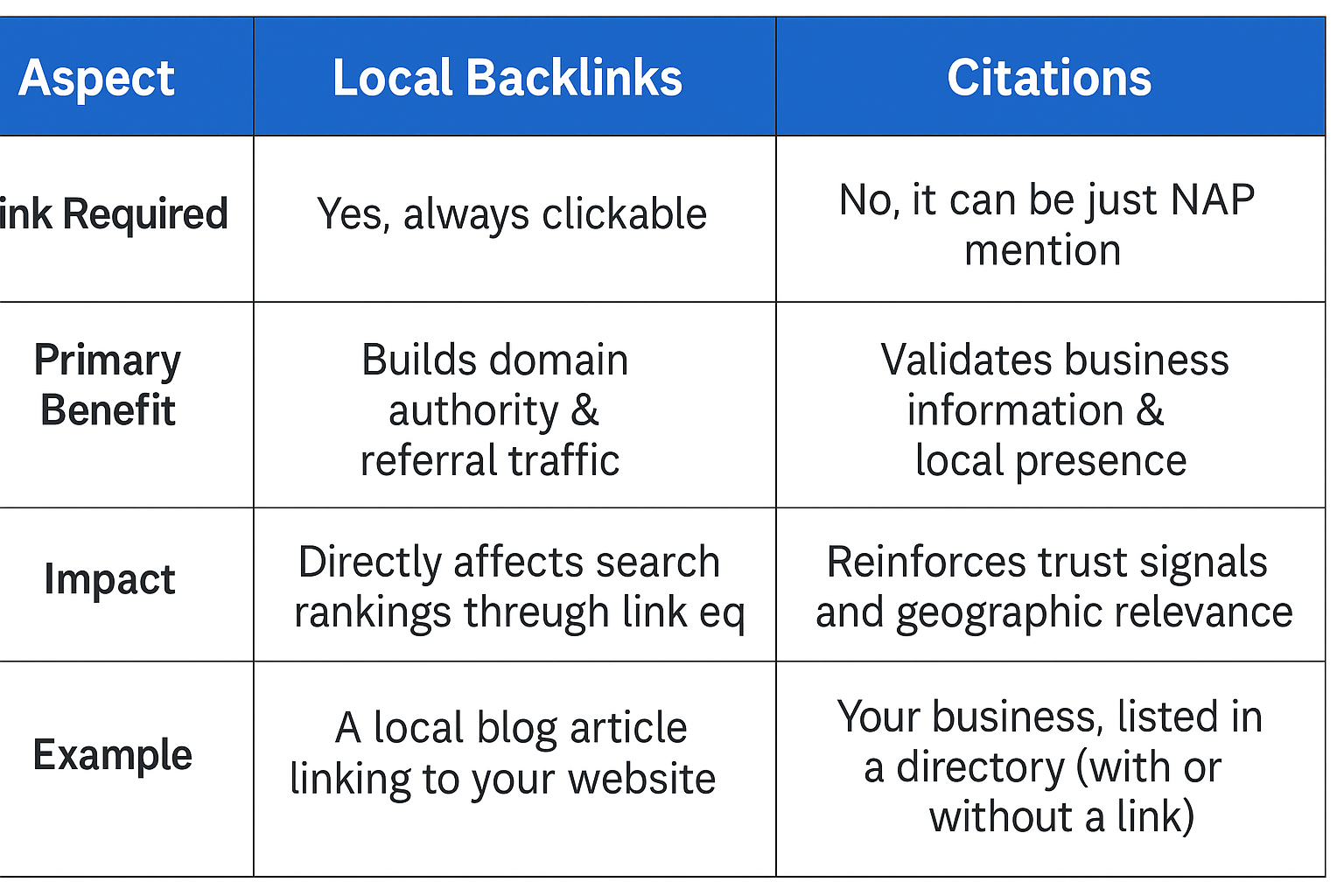
A local backlink is a clickable hyperlink from another website that points to yours. Its job is to guide users directly to your website. These links often come from websites that operate within your geographic area or serve the same local audience. Think of a local blog reviewing your service, a chamber-of-commerce directory listing your business, a neighborhood news site covering your work, or a community partner mentioning you on their website.
More backlinks mean higher authority, traffic, and Google trust for you. They improve rankings in search results, thereby moving your business ahead.
A citation is any online mention of your NAP (Name, Address, Phone), with or without a link. Citations don’t have to include a clickable link; they just include your NAP information. However, a citation with a link is considered an added bonus.
Yes, even without a link, citations still matter because they verify your business is legit. They reinforce your geographic relevance and also keep your NAP consistent across the web (Google loves this).
Key Differences:
- Backlinks are clickable links to your website; citations are mentions of your NAP, with or without a link.
- Backlinks pass authority and drive referral traffic; citations verify legitimacy and consistency.
- Both are important for local SEO, but they serve different purposes in your overall strategy.
16 Strategies to Build Local Backlinks
First things first—don’t buy links from manipulative link farms. It might feel like a shortcut, but it’s a one-way ticket to Google’s penalty box. Instead, focus on the following local backlink sources.
- Local News Sites and Online Magazines: Submit guest posts, get interviewed, or create newsworthy events. If you run a bike shop, pitch an article like “Top 5 Cycling Trails in Austin” to your city’s magazine.
- Chambers of Commerce: Most chambers list their members on their website with a link back to your business. These links are hyper-local and highly trusted by search engines.
- Local Event Sponsorships: Sponsor local 5K runs, school fundraisers, or Chamber of Commerce events. Event websites often feature sponsor pages with backlinks.
- Community Blogs: Identify bloggers in your area who cover your industry. Offer a brewery tour or exclusive tasting in exchange for a write-up and backlink.
- Niche Business Directories: Submit your business to niche directories and local listings. Use listing management tools like Synup to simplify listing management across multiple directories.
- Create Locally Relevant Content: Write local culture guides, tourism guides, or food guides that attract local bloggers, tourism boards, and media outlets.
- Partner with Local Influencers: Team up with foodies, travel bloggers, or community leaders for events and collaborations that generate backlinks.
- Collaborate with Local Businesses: Co-host workshops or create joint guides with complementary local businesses for mutual promotion and backlinks.
- Get Active in Online Communities: Join forums, Facebook groups, or platforms like Reddit. Be helpful, not spammy, and share resources that link back to your site.
- Ask for Mentions in “Best Of” Lists: Reach out to bloggers or editors who create “Best [Industry] in [City]” lists and pitch your business with a unique angle.
- Leverage Your Team’s Personal Connections: Tap into alumni features, board memberships, awards, and professional associations for backlink opportunities.
- Speak at Local Events and Conferences: Speaker bios, event recap articles, and local media coverage all create backlink opportunities.
- Offer Local Scholarships: Scholarship announcements attract attention from local newspapers, schools, and community pages.
- Become a Local Columnist or Regular Contributor: Pitch yourself as a columnist for your area’s newspaper or prominent local blog.
- Host Meetups and Community Events: Turn your office into a community space. Local clubs and organizations will mention your business on their websites and event pages.
- Engage with Community Organizations: Contribute to food banks, nonprofits, churches, and community centers. Support causes that genuinely matter, and backlinks will follow naturally.
What Makes a Quality Local Backlink
Not all backlinks are good for your business. For local SEO, quality beats quantity every single time.
High-Quality, Locally Relevant Content
Backlinks should fit naturally with your industry and business location. Links from local sources carry more weight for location-specific searches. It’s like Google’s way of saying, “This business knows its town!”
Authority
Quality backlinks come from top-ranking relevant websites. Domain authority is a number that indicates how highly a website will appear in search engine results, developed by Moz, ranging from 0 to 100. The ideal website has a domain authority score of 50 or above, but context matters more than rigid metrics.
If you’re a multi-location coffee shop, aim for a backlink from your city’s government tourism board. It shows both authority and local relevance.
Contextual Placement
When it comes to local backlinks, where they are placed in the linking website matters. Ideally, backlinks should be within the main content—blog posts, guides, or articles—not buried in the footer or hidden in a sidebar. Google looks at contextual placement to gauge a link’s relevance and authority.
Backlinking Example
Let’s say you run a florist shop in Woodsfield, Ohio. Local and industry-specific links can make all the difference.
Local and Regional Backlinks
Start close to home. Websites tied to your area help boost local SEO:
- Monroe County Ohio Government (DA: 29): A powerful local SEO backlink from a government site.
- Monroe County Beacon (DA: 26): Getting featured in a local publication can boost your community presence.
Local links like these tell search engines you’re the real deal when people search “best florist near me.”
Industry-Specific Backlinks
High-authority industry sites like the Society of American Florists (DA: 58) or Florists’ Review (DA: 43) provide credibility. Backlinks from industry sites can increase organic traffic significantly.
National Directories
Platforms like Yelp (DA: 95) and TripAdvisor (DA: 93) rank high on Google. Complete your profiles with high-quality images and customer testimonials.
Relevant Online Communities
Engaging in niche forums or groups like Reddit’s r/florists (DA: 95) or Flower Shop Network (DA: 81) can drive traffic and build authority. Be helpful, answer questions, and share tips.
Education and Research Backlinks
Collaborate with educational or horticultural institutions. Partner with Ohio State University Extension (DA: 90) for a local gardening workshop. If they link back to your site, that’s a double win: backlinks and community buzz.
How to Identify Good Backlinks
How do you know which backlinks are worth chasing? Follow this step-by-step guide:
- Analyze Traffic Potential: Use tools like Moz, Ahrefs, or SEMrush to check the linking site’s traffic. A local tourism blog with 10,000 monthly visitors is far better than a niche site with 200.
- Check Content Relevance: Does this site speak to your audience? A link from a pet blog makes sense for a dog grooming business; a link from a tech forum does not.
- Look for Organic Reach: Sites with high organic reach pack a punch. A link from a site with high organic reach amplifies your visibility.
- Assess Content Quality: Skim the site’s content. Look for well-written, informative articles backed by credible sources.
- Check Indexation Rate: If a page isn’t indexed by Google, the backlink won’t matter. Search
site:[page URL]to verify indexation. - Check Domain Authority: A site with a DA of 50+ is generally solid. However, don’t dismiss low-DA sites entirely—local backlinks from niche sites often drive targeted traffic.
- Conduct Competitor Backlink Research: Review competitors’ backlink profiles using SEMrush, Ahrefs, or Moz. Spot directories, sponsorships, and local media mentions you may have overlooked.
- Identify Broken Backlinks: Fix your own broken backlinks first, then find broken links on other local sites and offer your content as a replacement.
- Find and Convert Unlinked Brand Mentions: Use Ahrefs, SEMrush, or Google Alerts to track mentions of your business name and ask sites to add a link.
Do Local Backlinks Affect SEO
Absolutely. In fact, dramatically so. Most SEO experts say link building is critical for ranking success, with backlinks contributing to approximately 19% of all local ranking factors.
Top-ranking local businesses often have dozens of local referring domains, even small shops. SEO expert Joy Hawkins even ran a test showing that even a single high-quality local backlink can noticeably lift a business with no existing SEO. Google’s John Mueller has also repeatedly confirmed that backlinks are an essential ranking factor.
Local backlinks strengthen local search in several ways:
- Authority Transfer: Links from trusted local businesses, associations, and directories boost your site’s credibility.
- Geographic Relevance: Google places heavy weight on local references.
- Trust Signals: Backlinks help establish legitimacy, important for service businesses.
- Competitive Advantage: Links are the differentiator in competitive markets.
- Qualified Local Traffic: Local links send actual buyers, not random global visitors.
Dos and Don’ts
The Dos
- Focus on Geographic and Topical Relevance: Links should come from sites aligned with your location or industry. Local news? Yes. Random crypto blog linking to your bakery? Not really.
- Prioritize Quality Over Quantity: A handful of reputable local links can provide a significant ranking boost.
- Maintain NAP Consistency: Your Name, Address, and Phone Number must match everywhere.
- Build Authentic Community Relationships: Sponsor events, support causes, and create resources that genuinely help people.
- Create Valuable, Linkable Content: Share original insights instead of recycled SEO filler.
The Don’ts
- Buy Links from Spammy Sources: Google strongly discourages it. These links are risky and can lead to penalties.
- Engage in Illogical Link Exchanges: Trading links with unrelated businesses doesn’t sit well with search engines.
- Neglect Local Relevance: A link from your neighborhood newspaper often carries far more weight than a national site.
- Treat Link Building Like a Side Dish: In competitive markets, links are the main course.
- Ignore Low Authority Links Entirely: In local SEO, all relevant links matter. Relevance outweighs raw authority every time.
Summing Up
Building local SEO backlinks takes effort. But the payoff is worth it. Thankfully, finding the best backlinks doesn’t require a PhD in Google algorithms. Start local. Build authentic relationships. Think about what your customers and community need—and link your way to the top of the search results.
Want to do it even better? Try Synup to manage and enhance your local SEO strategy.
FAQs
How to generate backlinks for free?
You can generate local backlinks for free by forming relationships with journalists, influencers, local bloggers, and local businesses. Start by writing guest posts for local blogs or collaborating with other businesses. You could also participate in local events and ask for a mention.
How much do backlinks cost?
While you can build local SEO backlinks for free, some high-quality links might cost between $50 and $1,000 each if you are working with an agency. It depends on the niche, linking website authority, and backlink type. Paying for a sponsorship that includes a link from a local organization can also be worth the investment. Be cautious with cheap offers, though—spammy or poor-quality links can lower your rankings.
Can I rank my website without backlinks?
Technically, yes—but chances of ranking are low. Backlinks are one of Google’s top ranking factors. Without them, your site relies solely on content and on-page SEO, which is harder to scale. For competitive local markets, local backlinks act as trust signals for search engines.