How to create a high-converting local business website for your clients
Build local business websites that turn visitors into calls, bookings, and walk-ins. A complete guide covering design, local SEO, trust signals, and conversion optimization.
Most local business clients come to agencies with the same request: “We need a website that looks professional.”
What they actually need (and what they’re not saying, because they don’t know how to say it) is a website that turns visitors into phone calls, bookings, and walk-ins. Those two goals are related but not the same. And conflating them is exactly why so many polished local business websites produce disappointing results.
A high-converting local business website has to do three jobs simultaneously: perform well in local search to attract the right visitors, establish trust fast enough to keep them, and make it effortless for them to take action.
This guide covers how to build a site that does all three, specifically from the agency practitioner’s perspective.
- Local websites must drive calls, bookings, and walk-ins.
- Mobile-first speed and clear above-the-fold messaging determine if visitors stay or leave.
- Trust signals (reviews, real photos, credentials) are critical to conversion.
- Location pages and local SEO drive most high-intent traffic.
- Make action effortless with click-to-call, short forms, and low friction.
Why Local Business Websites Are Different
Before getting into specifics, it’s worth being clear about what makes local business website design distinct from building sites for e-commerce brands, SaaS products, or content businesses:
- Visitor intent is unusually high: someone searching for “emergency plumber near me” or “dentist in Austin accepting new patients” isn’t just browsing. They’re ready to take action. Research shows visitors make stay-or-leave decisions within 8 seconds, with 80% of that time focused on the headline. The site’s job isn’t to educate or persuade from scratch. It’s to quickly confirm that this is the right place, and then make it easy to act.
Research also shows that 88% of consumers who conduct a local search on their smartphone visit or call a business within 24 hours. That’s not a search audience you need to nurture. It’s an audience you need to convert immediately.
- Mobile is the primary channel: 57% of local searches are conducted on mobile devices. This changes the design hierarchy in a meaningful way. It means click-to-call is more important than a contact form. It means load time directly affects whether the visitor stays or leaves. And it means the experience on a 375px screen should drive design decisions, not a widescreen mockup in Figma.
- Trust is the primary conversion barrier: Local searchers have usually never heard of the business they found. They’re making a rapid judgment call based on signals that may seem superficial (photos, reviews, credentials, design quality) but are actually how humans have always evaluated unfamiliar service providers. Get trust wrong, and nothing else on the site matters.
- The website and Google Business Profile are a system: Local businesses don’t live or die by the website alone. The GBP listing is often the first thing a searcher sees. The website needs to function as a trust-confirming destination for visitors who arrived from GBP, and the two need to be consistent enough that Google doesn’t treat them as conflicting signals.
Performance Foundations: Mobile-First and Page Speed
None of the design and content decisions below matter if the site is slow and difficult to use on mobile. These are the non-negotiable technical requirements that have to be resolved before any creative work begins.
- Mobile-first means designing for the smallest screen first: Navigation, CTAs, forms, and content hierarchy: all of it should be built for a 375px viewport and enhanced upward from there, not retrofitted downward from a desktop design after the fact.
- Page speed is both a ranking signal and a conversion driver: According to Google, 53% of mobile users abandon websites that take longer than 3 seconds to load. This eliminates a potential lead before they’ve seen a single line of the client’s pitch. For local businesses where every call matters, even small performance improvements have direct revenue implications.
The three Core Web Vitals Google officially evaluates are Largest Contentful Paint (LCP: how fast the main content loads, target under 2.5 seconds), Interaction to Next Paint (INP: responsiveness to user interactions, target under 200ms), and Cumulative Layout Shift (CLS: visual stability as the page loads, target under 0.1). Fix any “poor” scores before launch.
- Practical speed levers for local business sites: These include hero image compression (often the single biggest file on the page), deferred loading of non-critical JavaScript, efficient hosting on a modern stack (not budget shared hosting), and lazy loading for any below-the-fold images and media. Run the site through Google PageSpeed Insights and Search Console’s Core Web Vitals report before going live. Treat red scores as blockers, not suggestions.
Learn More: 10+ Marketing Agency Website Examples to Get You Inspired
The Homepage: First Impression, CTA, and Trust
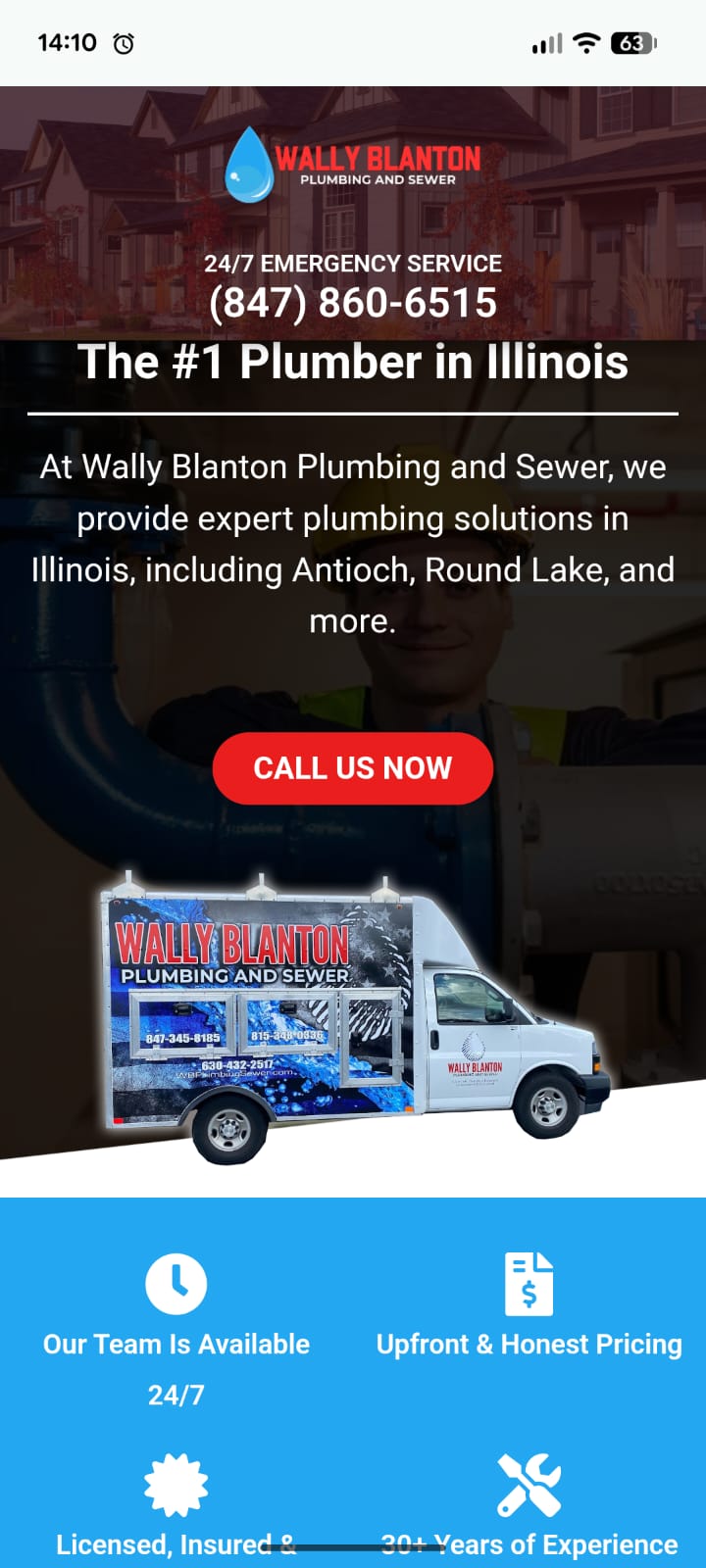
The homepage is the highest-traffic page for most local business clients, and it’s where the conversion battle is won or lost above the fold. Every element in the hero section has a specific job.
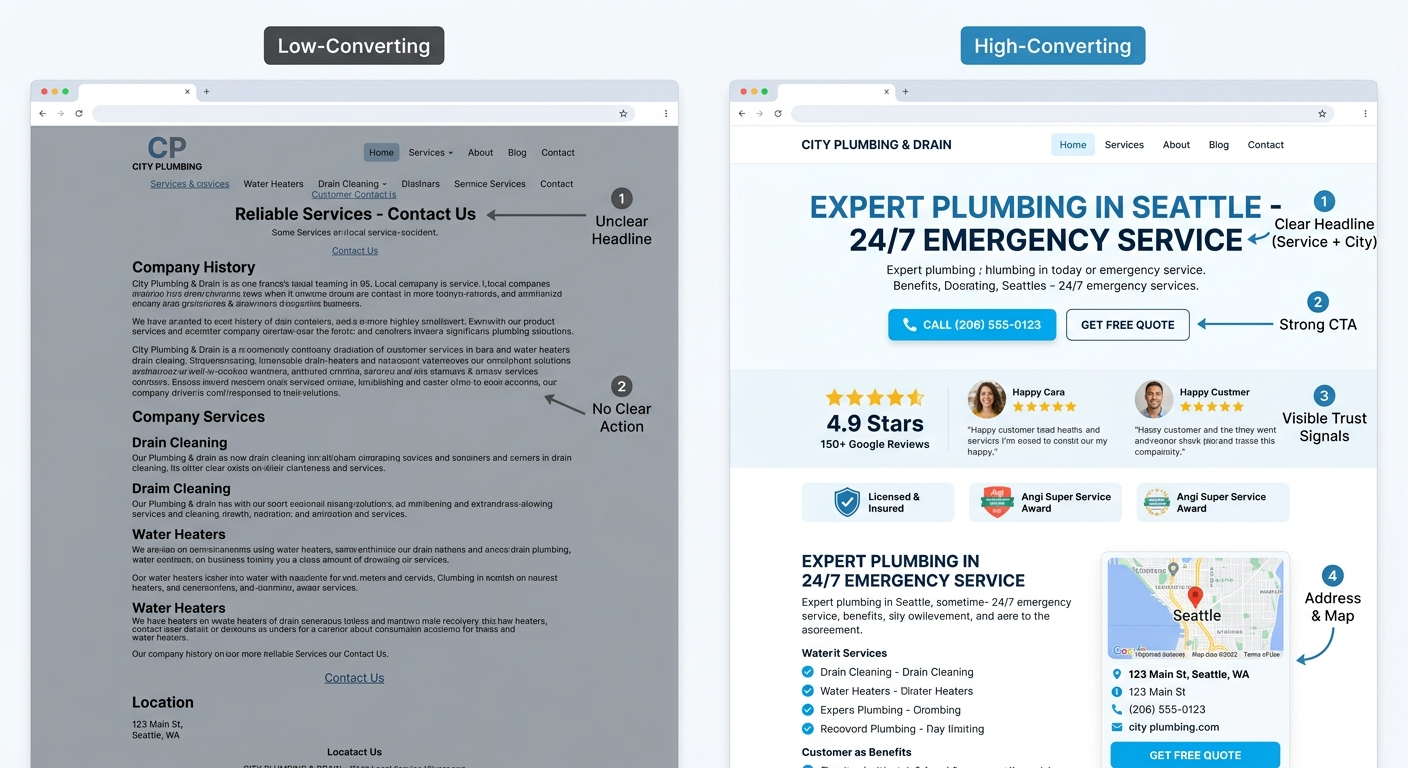
- The hero section needs to answer 3 questions in under 5 seconds: What does this business do? Where do they operate? And what should I do next? A reliable headline formula: [Service] + [Location] + [Key differentiator or benefit]. Example: “Licensed HVAC Services in Denver | Same-Day Repairs Available.” Not clever. Not branded. Immediately clear.
- Only one primary CTA above the fold: For most local service businesses, the highest-converting CTA is a “tap-to-call” button, not “Request a Quote,” not “Learn More.” If the client’s business model runs on phone calls, the phone number should be large, prominently placed, and clickable.
- Trust signals belong in the hero section: Star rating badge, number of Google reviews, years in business, relevant licenses or certifications: these answer the trust question immediately, before a visitor has to scroll.
- Social proof below the fold should feel real: 3-5 featured Google reviews with reviewer names and, ideally, location references (e.g., “Sarah M., Austin”) convert better than anonymous testimonials on a branded card.
- Real photography instead of stock images: Photos of actual staff, vehicles, work sites, or completed projects increase trust and conversion for local businesses more than any design element.
- Service area clarity on the homepage: For businesses serving multiple neighborhoods or cities, the homepage should name the service area explicitly.
Location and Service Area Pages
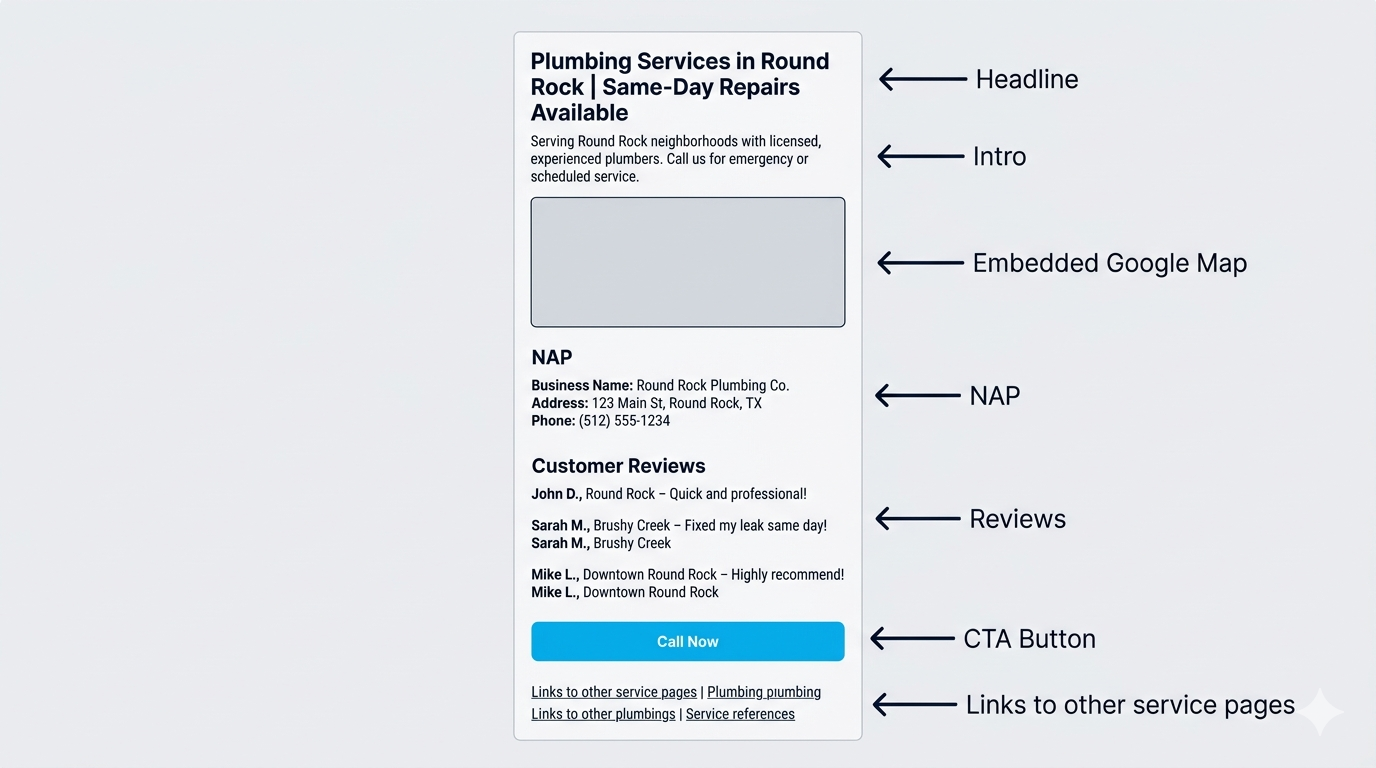
This is what most agency web builds underinvest in. Location pages are often the primary traffic drivers for local search and the highest-converting pages on the site.
- Why location pages matter for local search:
Google ranks individual pages in local results, not just domains. A service area page targeting “plumber in Round Rock” can rank independently for that specific query even if the business is headquartered 20 miles away. Businesses implementing comprehensive local page strategies report average revenue increases of 23% within the first year.
Local SEO On-Page Optimization
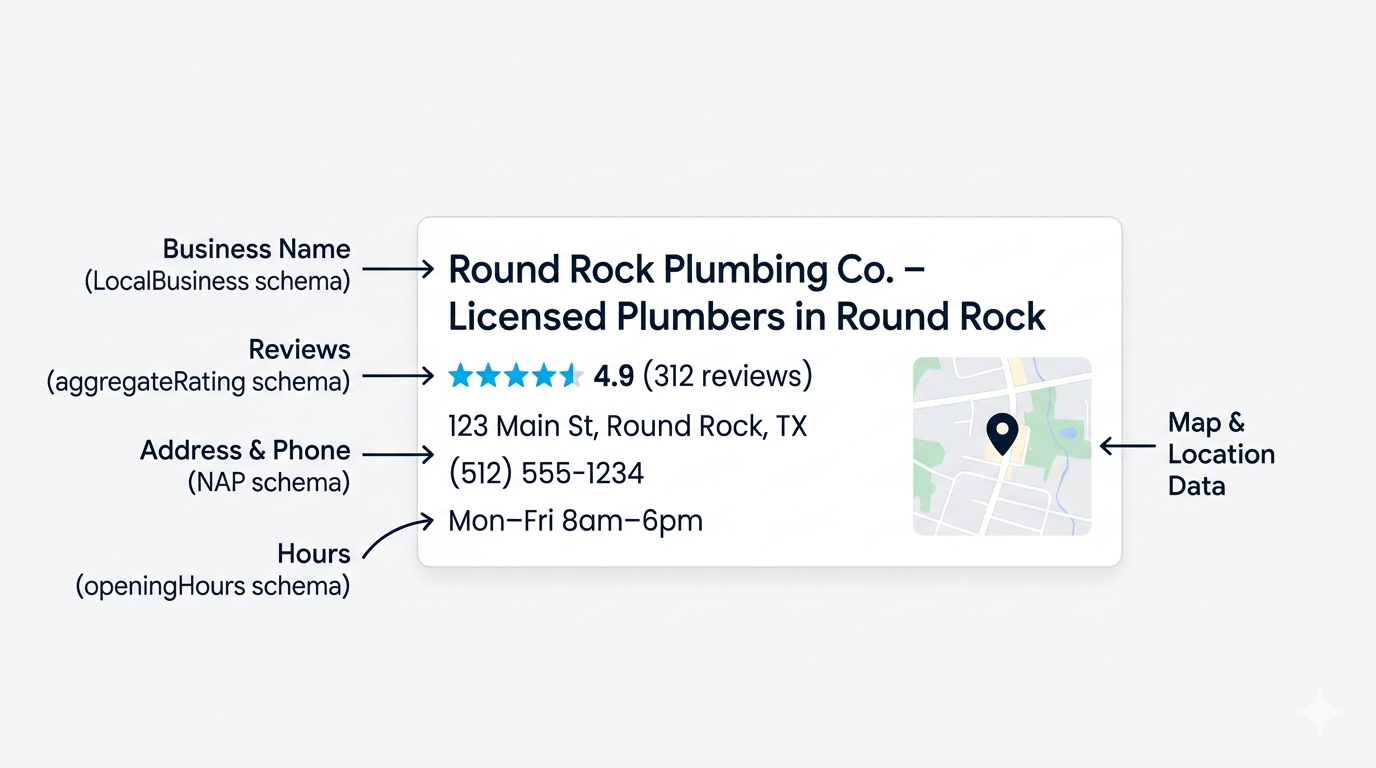
A well-designed local business website that isn’t optimized for local search is essentially invisible.
Also Read: 5 White Label Local SEO Services to Offer Your Clients Today
Integrating the GBP and Website
The website and GBP are two parts of the same local search system.
Also Read: Google Business Profile Optimization For Dummies in 2026
Conversion Optimization: Making It Easy to Take Action
Great design and strong SEO get visitors to the site. Conversion optimization determines whether they call, book, or leave.
Measuring and Iterating on Conversion Performance
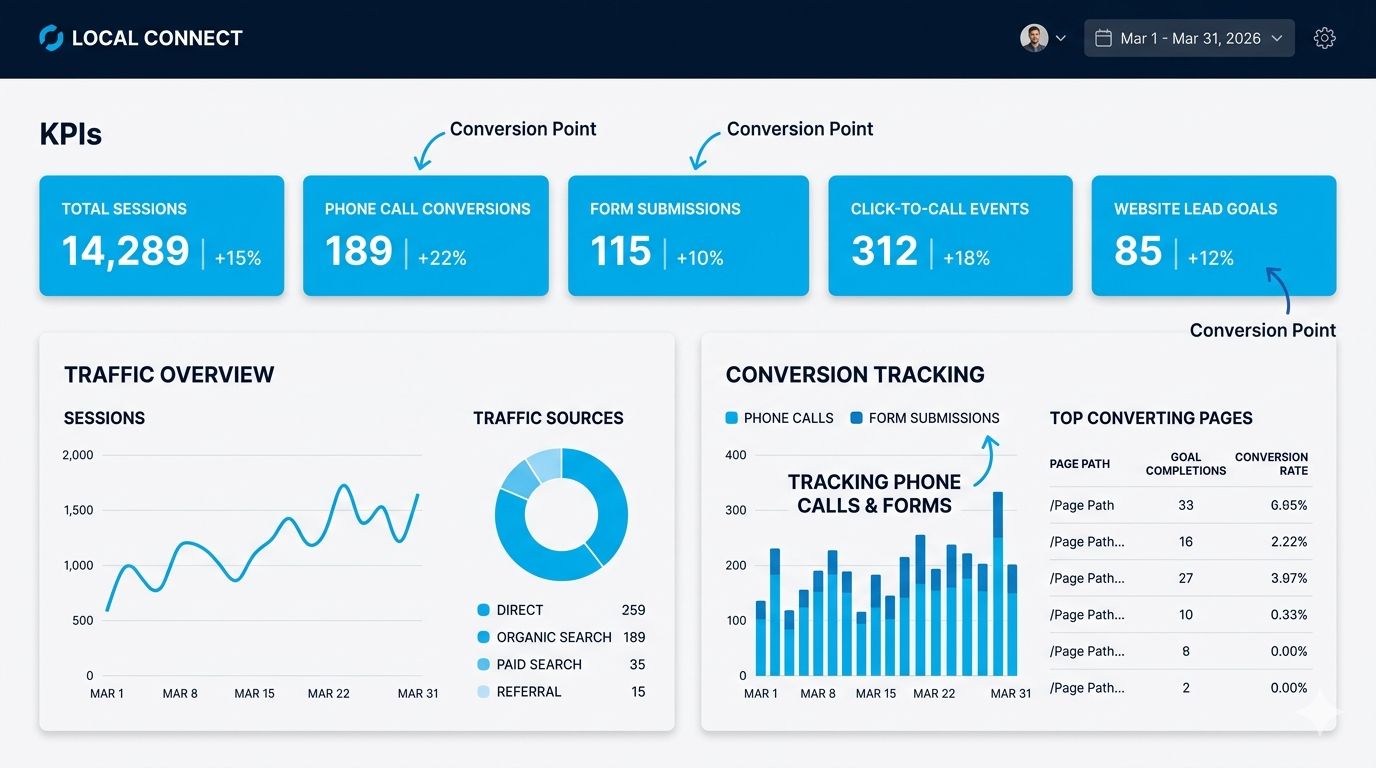
A local business website isn’t finished at launch. It’s a conversion asset that should improve over time.
Conclusion
A high-converting local business website is an outcome project rather than a design one. Everything in this guide is in service of one goal: connecting the right local searcher with the right business action.
For agencies looking to build that ongoing service offering alongside website delivery, Synup helps you turn one-time projects into recurring revenue by bundling listings, reviews, SEO, and social into a fully white-labeled growth platform.
FAQs
- What makes a local business website high-converting?
A high-converting site is built around action. It quickly builds trust and makes it easy for visitors to call, book, or visit without friction.
- Why are location pages important for SEO?
They help businesses rank for specific city-based searches and capture high-intent local traffic.
- Is SEO or design more important for local websites?
Neither works alone. SEO brings visitors, but design and UX convert them. You need both aligned.